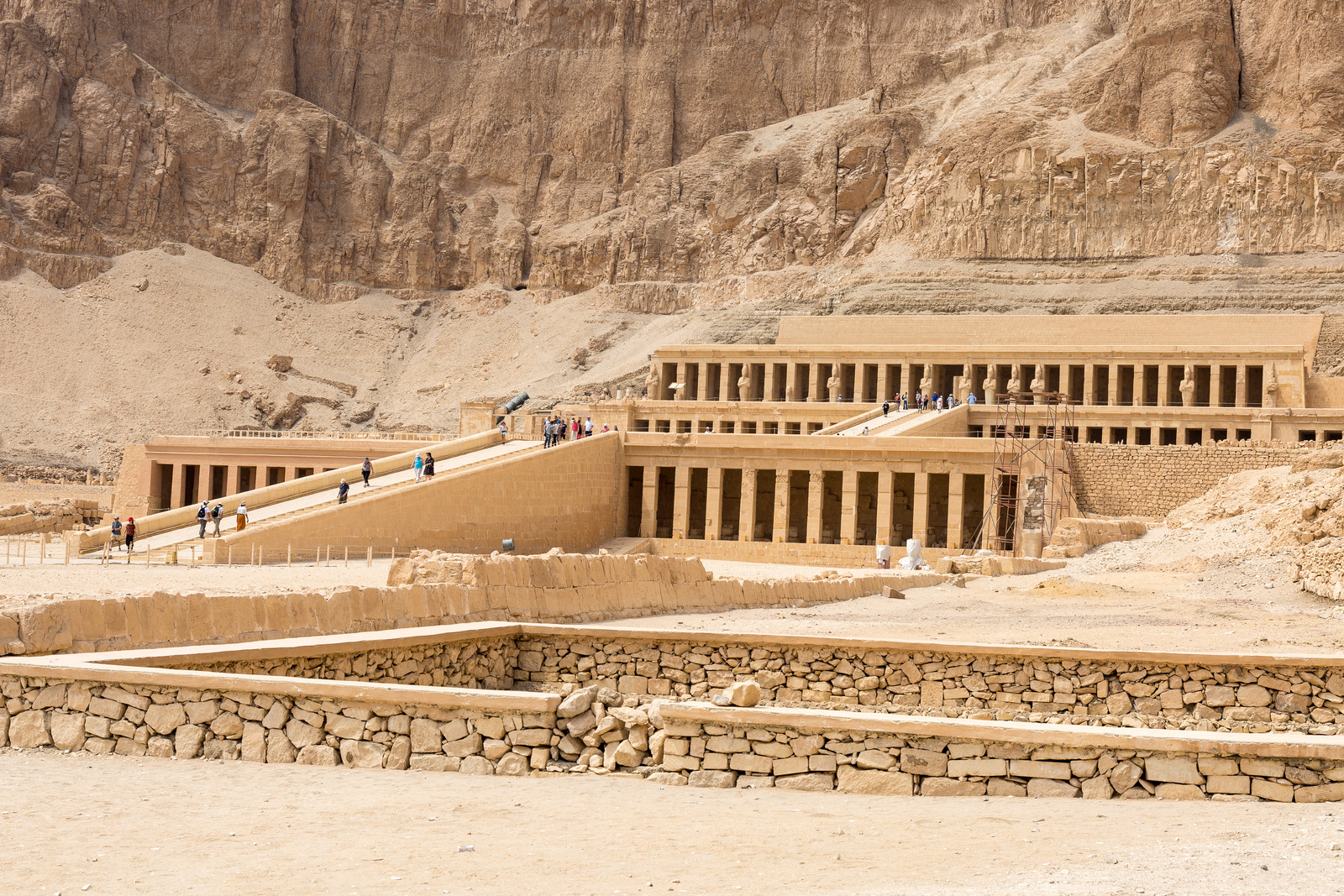
Hatshepsut Temple tour from Hurghada is one of the most exciting tourist tours that will take you back to ancient times to enjoy the mortuary temple of Queen Hatshepsut (Djesros, meaning “Holy of Holies”), which is located in a majestic location on the slopes of the towering limestone mountains in Deir el-Bahari on the west bank of Luxor, and is considered an architectural masterpiece among the most wonderful achievements of the ancient world.
Designed by the royal architect Senenmut during the 15th century BCE (18th Dynasty), this magnificent three-tiered terraced sanctuary was engineered to blend seamlessly into the natural rock face behind it, creating a harmonious balance between human craftsmanship and nature.
Booking a specialized Hatshepsut Temple tour from Hurghada allows you to journey from the Red Sea coast to explore the legacy of ancient Egypt’s most successful female pharaoh. Ruling as a full sovereign king for over two decades, Hatshepsut transformed the Egyptian empire through lucrative international trade, peace, and unprecedented monumental construction, establishing a reign that redefined royal power.
Unlike conventional temples built on flat ground, Hatshepsut’s temple ascends via sweeping central ramps across three massive colonnaded terraces. Within these shaded porticoes lie some of the best-preserved, vibrant wall reliefs in Upper Egypt, documenting her divine birth, the famous naval expedition to the mysterious land of Punt, and her devotion to Amun-Re, Hathor, and Anubis.
At Manolo Tours Egypt, we deliver an exceptional Hatshepsut Temple tour from Hurghada. Featuring private VIP transfers across the desert highway, expert guidance by university-degreed Egyptologists, and flexible scheduling to beat peak crowds, we ensure a seamless and unforgettable historical journey.
Why Book a Hatshepsut Temple Tour from Hurghada?
A dedicated Hatshepsut Temple tour from Hurghada offers private climate-controlled transit straight across the Eastern Desert to the Theban West Bank. Accompanied by a private Egyptologist guide, you explore the three terraced levels of Djeser-Djeseru, the Punt Colonnade, the Divine Birth Reliefs, the Chapel of Hathor, and the Upper Sanctuary of Amun-Re with complete crowd-avoidance scheduling.
The Female Pharaoh: Royalty, Legitimacy & Political Genius
Understanding the historical magnitude of your Hatshepsut Temple tour from Hurghada requires examining the unique political climate of the 15th century BCE. Following the early death of her husband, Pharaoh Thutmose II, Hatshepsut initially stepped into power as regent for her young stepson, Thutmose III.
However, within seven years, she made an unprecedented legal and political move: declaring herself full co-ruler and King of Upper and Lower Egypt (Pharaoh).
The Divine King Persona:
Ancient Egyptian theology required the sovereign ruler to embody the male god Horus on earth. To satisfy religious tradition without causing civil instability, Hatshepsut strategically adjusted her public image. Stone statues throughout her mortuary temple depict her with the classic athletic male body of a pharaoh, complete with the ceremonial false beard, while wall inscriptions maintain female grammatical titles like “Daughter of Re” and “Lady of the Two Lands.”
Architectural Masterpiece: Senenmut & The 3 Terraced Levels
The physical layout of Djeser-Djeseru (Hatshepsut’s Temple) broke away completely from traditional pharaonic temple design. Designed by her master architect, royal steward, and close confidant Senenmut, the sanctuary was engineered to integrate into the dramatic amphitheater of vertical limestone cliffs at Deir el-Bahari.
Senenmut’s Architectural Genius:
Visual Symmetry:
Senenmut aligned the central axis of Deir el-Bahari directly across the Nile River with the Great Temple of Amun at Karnak, establishing a spiritual line of sight (the Opet path).
Organic Integration:
Instead of building high stone walls that competed with the environment, he used horizontal colonnades that mirrored the dark vertical fissures of the cliff face, creating a visual illusion where the mountain appears to anchor the temple.
Paved Ramps & Frankincense Terraces:
The wide central ramps were originally flanked by lush gardens containing imported frankincense and myrrh trees, planted in circular stone basins irrigated by water brought from the Nile.
Standing on the middle ramp during a private Hatshepsut Temple tour from Hurghada allows you to appreciate how Senenmut crafted what architectural historians consider the world’s first modern building.
The Expedition to Punt: Trade, Myrrh Trees & Marine Reliefs
One of the greatest historical treasures you will explore on the Middle Terrace during your Hatshepsut Temple tour from Hurghada is the famous Punt Colonnade. Located on the southern wing of the middle level, these remarkably detailed low-relief carvings document the grand naval trade expedition dispatched by Queen Hatshepsut to the land of Punt (Ta-Netjer, meaning “God’s Land,” located near modern Somalia/Eritrea) around 1482 BCE.
Masterpieces of Ancient Marine & Trade Realism:
Your private Egyptologist guide will point out astounding naturalistic details carved into the limestone walls:
Red Sea Marine Life:
Beneath the keels of the Egyptian ships, ancient artists carved marine fauna with species-level accuracy—including stingrays, squid, crayfish, and various Red Sea fish species still present in the waters off Hurghada today.
The Living Myrrh Trees:
The reliefs explicitly demonstrate how Egyptian sailors carefully lifted living frankincense and myrrh saplings with their root balls intact, transporting them across the desert to be planted on the terraces of Deir el-Bahari. You can still see the fossilized stone tree-planting pits in front of the lower terrace today!
The Divine Birth and Coronation Reliefs
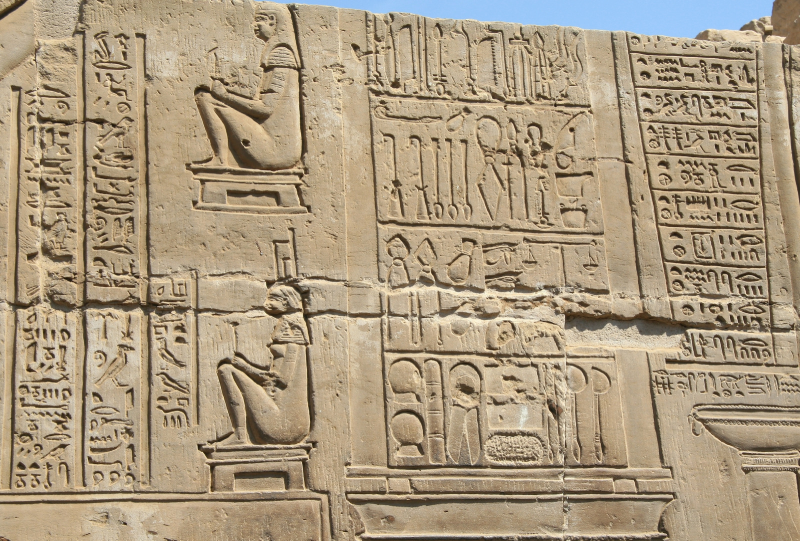
Hatshepsut Temple Tour from Hurghada_The Divine Birth and Coronation Reliefs
Opposite the Punt Colonnade on the northern wing of the Middle Terrace sits the Birth Colonnade. Here, Hatshepsut executed her most sophisticated theological propaganda campaign to seal her absolute divine right to the throne of Egypt.
By presenting her birth not merely as a human royal event, but as a direct biological decree from Amun-Re, Hatshepsut silenced opposition from conservative factions and established an untouchable theological foundation for her 22-year rule.
Chapels of Hathor & Anubis and Upper Sanctuary of Amun-Re
Extending beyond the central relief porticoes on the Middle Terrace during your Hatshepsut Temple tour from Hurghada, you explore two beautifully preserved side shrines dedicated to guardian deities, before ascending to the absolute spiritual core of the complex.
The Chapel of Hathor:
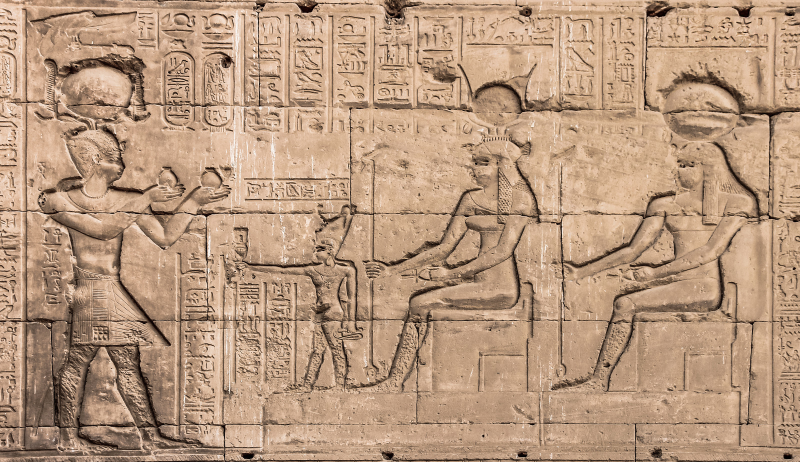
Hatshepsut Temple Tour from Hurghada_Chapel of Hathor
Hathor served as the primary protectress of the Deir el-Bahari valley. Entering this shrine reveals magnificent Hathor-headed capitals—columns sculpted with the face of a woman featuring bovine (cow) ears. The inner wall reliefs show Hatshepsut drinking sacred milk directly from the divine cow Hathor, symbolizing her receiving eternal divine strength.
The Chapel of Anubis:
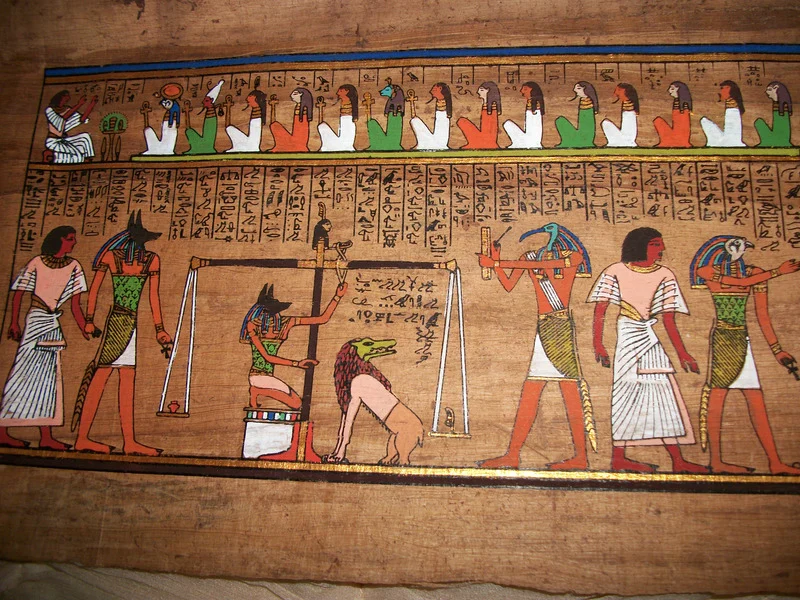
Hatshepsut Temple Tour from Hurghada_Chapel of Anubis
Located on the opposite northern side, this pristine shrine contains a 12-column hall with vaulted ceilings painted with deep cobalt blue and golden stars, representing the night sky. The wall carvings retain their original 3,400-year-old mineral paints, showing crisp images of jackal-headed Anubis receiving offerings of wine, gazelles, and lotus blossoms.
The Upper Terrace & Inner Sanctuary of Amun-Re:
Ascending the final upper ramp brings you past colossal Osiride statues of Hatshepsut guarding the top colonnade. At the very back of the upper courtyard lies the Holy of Holies (Sanctuary of Amun-Re):
Bedrock Excavation:
Master stonemasons tunneled directly into the solid limestone cliff to carve this sacred chamber.
The Sacred Barque Rest:
This inner chamber housed the gilded wooden boat of Amun-Re when it crossed the Nile from Karnak during the annual Beautiful Feast of the Valley.
The Erasure Campaign & Modern Restoration
When exploring the upper terraces during your Hatshepsut Temple tour from Hurghada, your private Egyptologist will point out a dramatic historical scar visible across many sandstone walls: erased cartouches, chiseling over royal figures, and carefully targeted hammer marks.
Why Was Hatshepsut’s Memory Attacked?
For centuries, popular history assumed Thutmose III acted out of personal revenge against his stepmother. However, modern Egyptological analysis reveals a far more strategic political motive:
Delayed Action:
The erasure campaign did not begin immediately after her death, but roughly 20 years into Thutmose III’s independent reign.
Dynastic Legitimacy:
Thutmose III sought to ensure a clean line of succession for his own son, Amenhotep II. Erasing Hatshepsut’s period as “King” prevented descendants of her rival royal branch from claiming legitimate rights to the throne.
Selective Chiseling:
Her images as king were systematically erased or replaced with the names of Thutmose I, II, or III, while her non-regal monuments as Queen consort were often left intact.
The Modern Restoration Miracle:
Much of what visitors admire today at Deir el-Bahari is the result of over six decades of painstaking work by the Polish-Egyptian Archaeological Mission:
Archaeologists excavated thousands of smashed limestone and granite fragments from nearby debris pits.
Using modern stone conservation science (anastylosis), experts reassembled the grand Osiride statues flanking the Upper Terrace and restored the structural integrity of the upper colonnades.
Crowd Avoidance and Photography Strategy at Deir el-Bahari
Because Deir el-Bahari faces directly east towards the rising sun, controlling your arrival time is critical for both temperature comfort and achieving world-class photography.
Professional Photography Angles for Deir el-Bahari:
The Classic Alignment:
Stand at the lower entrance gate along the central walkway using a wide-angle lens (16mm–24mm) to capture all three terraced ramps aligned with the towering mountain cliff behind.
The Osiride Sentinel Frame:
On the Upper Terrace, position yourself side-on to the restored Osiride statues, framing the dramatic contrast between polished white limestone and deep blue sky.
The Hathor Capital Detail:
Inside the Hathor Chapel, capture close-ups of the cow-eared capitals under soft ambient shade to highlight original tool marks and traces of ancient mineral pigment.
Driving from Hurghada to Deir el-Bahari
Executing a smooth, stress-free Hatshepsut Temple tour from Hurghada relies on expert road transit across the Eastern Desert, followed by a direct approach to the amphitheater cliffs of the Theban West Bank.
The Electric Shuttle Train (Taftaf):
To protect the fragile ancient sandstone structures from vehicle emissions and heat, all motorized transport stops at the main visitor center complex. From here, visitors board eco-friendly open-air electric shuttle trains (Taftaf) that transport you seamlessly across the paved desert approach directly to the base of the lower terrace.
Financial & Entry Ticket Breakdown
Understanding the official entrance fee structure and ticket window policies enforced by the Ministry of Tourism & Antiquities ensures zero surprises at the site gate:
- Main Deir el-Bahari Entry Ticket
The primary entry ticket grants comprehensive access to the entire three-tiered monument built into the towering cliffs of Deir el-Bahari. Visitors can explore the Lower, Middle, and Upper Terraces, the Punt Colonnade detailing ancient trade expeditions, the Divine Birth Reliefs, and the dedicated Chapels of Hathor and Anubis. This complete admission pass is fully included in your Manolo Tours private package price.
- Electric Shuttle Transit (Taftaf)
To shield guests from the desert heat and save energy for exploring the upper terraces, an electric shuttle (“Taftaf”) provides round-trip transport from the main visitor center across the open plaza directly to the temple ramp entrance. This short shuttle transit is pre-arranged and fully included in your private booking.
- Official Gate Payment Policy
The official ticket windows at Deir el-Bahari strictly enforce a digital transaction policy. All entry passes, shuttle tokens, and optional permits must be purchased using a credit or debit card (Visa or Mastercard), as physical cash currency is no longer accepted at local site ticket booths under any circumstances.
FAQs About Hatshepsut Temple tour from Hurghada
What makes a Hatshepsut Temple tour from Hurghada unique compared to other site tours?
Unlike traditional monuments, Hatshepsut’s temple (Djeser-Djeseru) features an extraordinary three-tiered terraced design built into the natural limestone cliffs of Deir el-Bahari, commemorating the rule of ancient Egypt’s most famous female pharaoh.
Who designed the Mortuary Temple of Queen Hatshepsut?
The sanctuary was designed by Senenmut, the royal architect, master steward, and trusted advisor to Queen Hatshepsut during the 15th century BCE.
What is depicted in the famous Punt Colonnade?
The reliefs in the Punt Colonnade document the historic naval trade expedition sent by Hatshepsut to the land of Punt, showing sea-going ships, tropical marine life, ebony, gold, baboons, and living myrrh trees.
Why are some reliefs of Queen Hatshepsut erased or defaced?
Roughly 20 years after her death, Pharaoh Thutmose III launched a targeted campaign (damnatio memoriae) to erase her royal cartouches and male pharaonic images to secure the line of succession for his son, Amenhotep II.
What shrines can be visited inside Hatshepsut’s Temple?
Visitors can explore the Chapel of Hathor (featuring double-faced cow-eared columns), the Chapel of Anubis (with vibrant original wall paints), and the inner Sanctuary of Amun-Re cut directly into the mountain bedrock.
Is there a shuttle train from the visitor center to the temple entrance?
Yes. An open-air electric shuttle train (Taftaf) transports visitors seamlessly across the 500-meter approach from the visitor center to the lower terrace.
How far is Hatshepsut Temple from Hurghada by car?
The direct highway travel time from Hurghada to Deir el-Bahari on the West Bank of Luxor is approximately 3.5 to 4 hours each way via a private, climate-controlled vehicle.
Can I purchase entry tickets at Hatshepsut Temple with physical cash currency?
No. Official ticket booths at Deir el-Bahari strictly operate on a card-only payment policy (Visa or Mastercard). When you book with Manolo Tours Egypt, all entry passes are pre-arranged seamlessly.
Is photography allowed inside Hatshepsut Temple?
Yes! Personal photography using handheld smartphones or standard cameras is 100% free throughout the open terraces and porticoes. Tripods require a special commercial permit.
Can a Hatshepsut Temple tour from Hurghada be combined with the Valley of the Kings?
Yes! Because Deir el-Bahari sits right on the West Bank, a private tour with Manolo Tours Egypt easily combines Hatshepsut Temple, the Valley of the Kings, and the Colossi of Memnon on the same day.
Key Takeaways
A private Hatshepsut Temple tour from Hurghada takes you to the architectural marvel of Deir el-Bahari, built by master architect Senenmut for ancient Egypt’s female pharaoh.
Marvel at the sweeping three-tiered terraced layout seamlessly integrated into the towering limestone cliffs of the Theban Necropolis.
Explore vivid 3,400-year-old reliefs detailing the historic naval trade expedition to Punt, her divine birth story, and sacred shrines to Hathor and Anubis.
Benefit from VIP private transit, pre-cleared tickets, and crowd-avoidance scheduling with Manolo Tours Egypt.
Book Your Private Hatshepsut Temple Tour Today
Ready to ascend the terraced ramps of Deir el-Bahari, explore the vibrant reliefs of the Punt expedition, and discover the legacy of Queen Hatshepsut with total VIP comfort? Reserve your private excursion with Manolo Tours Egypt today.