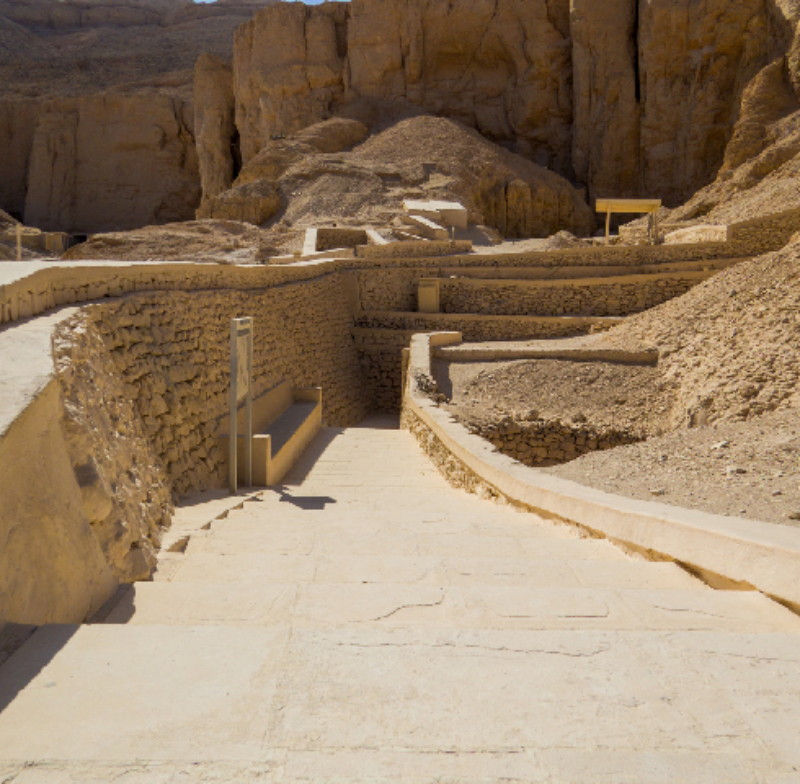
During the Valley of the Kings Tour from Hurghada, you will witness firsthand the most famous royal necropolis in human history: the Valley of the Kings, located deep within the sun-drenched limestone peaks of the Theban Necropolis. For more than 500 years during the New Kingdom (1550-1069 BC), Egypt’s greatest pharaohs—from Hatshepsut and Thutmose III to Seti I, Ramses II, and the young King Tutankhamun—abandoned the massive visible pyramids in favor of secret tombs carved into the rock underground, hundreds of feet deep in the solid mountain rock.
Booking a specialized Valley of the Kings tour from Hurghada allows you to cross the Eastern Desert divide and descend directly into these underground royal chambers, where vibrant painted walls look as fresh today as the moment ancient royal artisans laid down their brushes 3,300 years ago.
However, visiting this vast desert valley requires clear, tactical planning. With over 63 numbered tombs scattered across the site and rotating access schedules enforced by the Supreme Council of Antiquities, attempting an unguided or unorganized visit often leads to confusion, physical exhaustion, and missed highlights.
At Manolo Tours Egypt, we have engineered the definitive Valley of the Kings tour from Hurghada. By pairing high-speed direct VIP transport with licensed Egyptologist guides who specialize in subterranean funerary epigraphy, we ensure you explore the absolute highest-yield royal tombs in complete comfort, away from crowded tourist bus windows.
What Makes a Valley of the Kings Tour from Hurghada Extraordinary?
A dedicated Valley of the Kings tour from Hurghada provides direct, comfortable access to the subterranean resting places of Egypt’s imperial rulers. Moving from the Red Sea coast in a private climate-controlled vehicle, you bypass long public ticket queues with pre-cleared access passes.
Your general entry ticket grants admission to 3 exceptional royal tombs (such as KV2, KV6, or KV8), with optional add-on passes available for world-famous vaults like King Tutankhamun (KV62) and Seti I (KV17)—all decoded on site by your personal Egyptologist guide.
- Tomb of Tutankhamun (KV62)
Famous worldwide for its miraculous discovery, Tomb KV62 remains the only resting place in the Valley of the Kings that still houses the pharaoh’s actual mummy alongside his original gilded outer stone sarcophagus. Accessing this historical chamber requires a special entrance pass, offering visitors an intimate look at the final resting site of Ancient Egypt’s most renowned young king.
- Tomb of Seti I (KV17)
Regarded as the undisputed crown jewel of the necropolis, the Tomb of Seti I spans an impressive 137 meters deep into the subterranean rock. Widely considered a VIP masterpiece of ancient Egyptian art, its corridors and chambers feature exceptionally vibrant, fully preserved painted bas-reliefs that showcase the absolute height of New Kingdom craftsmanship and funerary design.
The Geology & Sacred Choice of the Necropolis (al-Qurn Peak)
Understanding why the pharaohs chose this exact desert location is the foundational chapter of any expert Valley of the Kings tour from Hurghada. The choice was neither random nor merely tactical; it was deeply rooted in ancient Egyptian solar theology and natural landscape symbolism.
- al-Qurn Peak: The Natural Mountain Pyramid
Rising 1,000 feet directly above the Valley of the Kings, al-Qurn (“The Horn”) serves as a natural, stone-carved pyramid standing guard over the royal necropolis. Ancient Egyptians selected this remote location largely because the peak’s distinct, naturally occurring triangular shape mirrored the built pyramids of the Old Kingdom. The mountain was sacred to Meretseger, the cobra deity whose name translates to “She Who Loves Silence,” believed to protect both the sacred tombs beneath and the workers who built them.
- al-Qurn Peak: The Natural Mountain Pyramid
Rising 1,000 feet directly above the Valley of the Kings, al-Qurn (“The Horn”) serves as a natural, stone-carved pyramid standing guard over the royal necropolis. Ancient Egyptians selected this remote location largely because the peak’s distinct, naturally occurring triangular shape mirrored the built pyramids of the Old Kingdom. The mountain was sacred to Meretseger, the cobra deity whose name translates to “She Who Loves Silence,” believed to protect both the sacred tombs beneath and the workers who built them.
1. The Natural Pyramid (al-Qurn):
During the Old and Middle Kingdoms, pharaohs constructed giant stone pyramids in northern Egypt (such as Giza and Dahshur). However, these massive structures acted as giant signposts for tomb robbers.
When New Kingdom pharaohs established their capital at Thebes, they looked west toward al-Qurn (“The Horn”), a natural 1,000-foot limestone mountain peak that naturally forms a perfect pyramid shape. By carving their tombs into the rock floor directly beneath this mountain, rulers gained the spiritual protection of a pyramid without building a visible stone target.
2. The Limestone Bedrock (Thebes Formation):
The valley consists of high-grade Eocene limestone interleaved with thin layers of marl and shale. This dense stone allowed ancient stonecutters (Servants in the Place of Truth) to chisel long, straight subterranean corridors that remained structurally sound for over three millennia.
2. General Entry Ticket Breakdown: The Top 3 Open Tombs
Your standard general entry pass included in a Valley of the Kings tour from Hurghada grants admission to 3 open royal tombs from a rotating selection of approximately 8 to 10 active sites.
To ensure you experience maximum visual impact, rich color preservation, and smooth walking conditions, your private Manolo Tours Egypt Egyptologist will guide you into the three highest-yield tombs open on the day of your visit:
1. Tomb of Ramses IV (KV2): The Celestial Blue Corridor
Architectural Layout: Short, wide, gently sloping wooden ramp leading to a large square burial chamber.
Epigraphic Highlights: KV2 is world-famous for its brilliant preservation and celestial artwork. The long entrance corridor features dramatic scenes from the Litany of Ra and the Book of Caverns.
The Ceiling Masterpiece: Inside the burial chamber, your guide will point out the stunning ceiling depicting goddess Nut stretching across a deep lapis-lazuli blue sky, swallowing the sun at dusk and giving birth to it at dawn.
The Sarcophagus: Houses an enormous, intact red granite sarcophagus covered in protective spells.
- KV2 Tactical Highlights (Tomb of Ramses IV)
Tomb KV2 offers exceptionally easy physical access, featuring wide, smooth wooden boardwalks with zero steep steps, making it ideal for a comfortable walkthrough. The tomb stands out for its remarkable color preservation, showcasing vivid yellows, rich deep blues, and crisp black inscriptions across its walls. Its primary highlights include a massive, intact granite sarcophagus set within the burial chamber and an incredible celestial ceiling depicting the sky goddess Nut stretching across the cosmos.
2. Tomb of Ramses IX (KV6): The Astrological & Underworld Journey
Architectural Layout: Straight, wide descending corridor with deep pillared halls cut into the limestone.
Epigraphic Highlights: Features complete, uninterrupted painted reliefs from the Book of Gates and the Book of Amduat. The entry corridor walls display detailed depictions of serpent guardians, protective demons, and magical amulets.
Astronomical Ceiling: The inner chamber ceiling displays a complete ancient astrological map, showing constellations, decan stars, and celestial boats carrying the sun god across the night sky.
3. Tomb of Merenptah (KV8): The Deep Subterranean Giant
Architectural Layout: Reaches a depth of over 160 meters into the mountain, featuring steep descending corridors and wide pillared halls.
Epigraphic Highlights: Merenptah (son and successor of Ramses II) built one of the longest and deepest tombs in the valley. The entry hall features stunning high-relief carvings of the king standing face-to-face with Ra-Horakhty.
The Outer Sarcophagus Lid: Deeper inside the tomb rests the giant lid of Merenptah’s outer granite sarcophagus, carved in the likeness of the pharaoh as a reclining mummified god.
Special Access Extra-Ticket Tombs: Tutankhamun, Seti I & Ramses VI
While the standard general ticket provides a breathtaking introduction to the necropolis, the Supreme Council of Antiquities requires separate entry passes for three legendary subterranean vaults.
Including these special-access tombs in your Valley of the Kings tour from Hurghada unlocks some of the rarest historical and artistic treasures ever created:
- King Tutankhamun (KV62): “The Golden Treasure”
While relatively compact compared to neighboring royal tombs, KV62’s four-room layout offers an unmatchable historical connection. As the site of Howard Carter’s historic discovery, it remains the only tomb in the valley where you can stand face-to-face with the pharaoh’s actual mummy resting within his original, massive stone sarcophagus.
- Seti I (KV17): “The Masterpiece Vault”
Widely regarded as the supreme artistic achievement of the necropolis, the Tomb of Seti I extends an extraordinary 137 meters into the rock face across 11 grand chambers. Every wall is covered in deep, high-relief carvings and vibrant pigments, showcasing the absolute pinnacle of New Kingdom subterranean architecture and craftsmanship.
- Ramses VI (KV9): “The Double Royal Hall”
Originally commissioned by Ramses V and later expanded by Ramses VI, this impressive dual-built tomb features long, wide corridors that lead to a massive vaulted burial chamber. Its walls display complete painted texts of the Book of the Day and Book of the Night, crowned by a striking, fully intact astronomical ceiling depicting the star-covered body of the goddess Nut.
1. Tomb of King Tutankhamun (KV62): Standing Before the Boy King
Discovered in November 1922 by Howard Carter, KV62 is the most famous archaeological site on earth. While its 5,000 golden artifacts are now displayed in Cairo’s museums, visiting the actual tomb inside the valley remains a deeply moving historical experience:
What You See Inside: The tomb contains the original mummified body of King Tutankhamun displayed inside a climate-controlled glass chamber, alongside his original carved quartzite sarcophagus and gilded wooden outer shrine base.
The Antechamber Murals: The burial chamber walls feature vivid yellow-background murals illustrating the young king’s funeral procession and his opening-of-the-mouth ceremony performed by Pharaoh Ay.
💡 Is KV62 Worth the Extra Ticket? Yes. Standing face-to-face with the actual mummy of King Tutankhamun inside the exact room where Howard Carter first peered into the golden darkness is an unforgettable moment on any Valley of the Kings tour from Hurghada.
2. Tomb of Seti I (KV17): The Zenith of Pharaonic Art
Known as “Belzoni’s Tomb,” KV17 is the longest, deepest, and most exquisitely decorated tomb in the entire Theban Necropolis. Seti I (father of Ramses II) commissioned artists who achieved a level of relief carving unmatched in ancient history:
Architectural Grandeur: Descending 137 meters into the mountain through 11 chambers and sunken pillared halls.
Artistic Precision: Every wall surface features raised, high-relief plaster carvings painted with vibrant, lapis-lazuli, golden-yellow, and malachite-green pigments.
The Alabaster Sarcophagus Vault: The burial chamber features a vaulted ceiling painted with complete astronomical constellations and decan stars.
Tomb of Ramses V & Ramses VI (KV9): The Astronomical Hall
Originally carved for Ramses V and later expanded by Ramses VI, KV9 offers one of the most visually overwhelming subterranean walks in Egypt:
Symmetrical Corridor Design:
A long, straight, wide corridor cut deep into the rock with zero steep staircases.
The Double Book of the Earth:
The walls display complete, colorful chapters from the Book of Creation, Book of Gates, and Book of the Dead.
The Ceiling Masterpiece:
The burial chamber ceiling features two immense, parallel depictions of the sky goddess Nut, swallowing and birthing the solar disk over a shattered black granite sarcophagus.
How Royal Tombs Were Carved & Painted
During your Valley of the Kings tour from Hurghada, your Egyptologist guide will reveal the extraordinary engineering and artistic procedures used by the royal quarrymen and painters who carved these subterranean wonders out of solid limestone bedrock.
The Excavation Process (Servants in the Place of Truth):
Royal tomb cutters lived in the enclosed village of Deir el-Medina. Working in two 10-day shifts per month, teams worked under the direction of two head foremen:
Bronze and Flint Chisels:
Miners used bronze chisels and hard wooden mallets to fracture the limestone, using wooden wedges soaked in water to split massive rock sections.
Lighting by Sesame-Oil Lamps:
Miners worked deep underground illuminated only by linen wicks floating in pottery bowls filled with salted sesame oil or animal fat (the salt reduced smoke soot to preserve clean wall surfaces).
- Stage 1: Rock Smoothing and Plastering
The creation of a royal tomb began with preparing the raw, subterranean limestone walls. Stonemasons first smoothed the uneven rock surfaces before applying a thick base layer of muna—a traditional mud and straw plaster. Once dry, artists covered the walls with a fine, smooth coat of white gypsum plaster, creating a pristine canvas ready for detailed artwork.
- Stage 2: Red Ink Drafting and Proportional Grids
To ensure absolute mathematical precision, scribes dipped snapped strings into red pigment to snap rectangular grid lines onto the wet plaster. Guided by the strict canon of ancient Egyptian art, artists used these grids to sketch human figures in perfect proportion, maintaining a standard height of 18 squares from the soles of the feet to the hairline.
- Stage 3: Chief Scribe Corrections and Relief Carving
Before carving commenced, a master scribe thoroughly inspected the initial red drafts. Using bold black ink, the master artist painted corrections directly over the red lines to adjust anatomical contours, hieroglyphic details, or proportions. Once approved, skilled stonecarvers carved out the outlines to produce crisp low or high reliefs.
- Stage 4: Natural Mineral Pigment Painting
The final phase involved applying vibrant paints created from naturally sourced earth and mineral pigments bound with egg white or gum arabic. Artists assigned symbolic meanings to each color:
Lapis Lazuli & Egyptian Blue: Represented the sky and divine realms.
Malachite & Copper Compounds: Symbolized green foliage, agricultural renewal, and rebirth.
Orpiment & Yellow Ochre: Represented gold, signifying the eternal, imperishable flesh of the gods.
Red Ochre: Used to depict warm human skin tones, energy, and physical vitality.
Climate, Humidity & Micro-Climate Protection inside Tombs
Descending into underground rock-cut chambers presents unique physical conditions that every traveler taking a Valley of the Kings tour from Hurghada should prepare for.
Temperature & Humidity Dynamics:
Because royal tombs are carved deep into solid mountain rock, ambient temperatures remain remarkably constant year-round at 30°C to 35°C (86°F to 95°F), regardless of external weather. However, relative humidity rises significantly when multiple visitors enter enclosed spaces.
Modern Conservation Protocols:
To protect 3,300-year-old water-soluble plaster pigments from moisture degradation, the Supreme Council of Antiquities enforces strict environmental controls:
Glass Protective Barriers: High-clarity, non-reflective tempered glass panels shield lower wall reliefs from physical contact and moisture.
Elevated Wooden Ramps: Raised boardwalks keep visitor footsteps off ancient limestone floors while allowing natural air circulation underneath.
Air Extraction Units: Industrial ventilation ducts inside deep tombs like KV17 (Seti I) and KV9 (Ramses VI) continuously exchange subterranean air to keep humidity below critical thresholds.
Mobile Photography Rules & Lighting Techniques
Capturing the intense colors and subterranean atmosphere during your Valley of the Kings tour from Hurghada requires strict adherence to site regulations and smart photography techniques.
- Mobile Smartphone Photography Rules
Photography using mobile smartphones is completely free and permitted inside all open royal tombs with a standard entry ticket. However, flash usage is strictly prohibited under all circumstances. High-intensity flash bursts cause cumulative chemical degradation to the water-soluble pigments and delicate organic binders of ancient wall paintings over time.
- Professional Equipment Permits and Restrictions
Travelers wishing to use professional photography gear—such as DSLR cameras, mirrorless bodies, or dedicated video rigs—must purchase an additional professional camera pass at the site ticket office prior to entering. Regardless of permit status, supportive accessories including tripods, monopods, and electronic gimbals are strictly banned inside subterranean tomb corridors to protect delicate wall reliefs and ensure smooth pedestrian flow.
Smart Smartphone Lighting Tips for Tombs:
Disable Auto-Flash Permanently: Ensure your phone camera flash is toggled completely OFF before entering the tomb threshold to avoid accidental flashes that alert site guardians.
Utilize Night Mode / Low-Light Exposure: Modern smartphones automatically balance exposure when set to Night Mode (1 to 2-second capture), revealing hidden details in dimly lit tomb chambers.
Focus on Textured High Reliefs: Position your smartphone camera at a 45-degree angle to tomb wall surfaces to capture the depth of hand-chiseled hieroglyphic reliefs highlighted by ambient tomb spotlights.
Combining the Necropolis with Surrounding West Bank Treasures
While the royal tombs are the undisputed center of the Theban Necropolis, a private Valley of the Kings tour from Hurghada allows you to seamlessly integrate surrounding West Bank archaeological masterworks on the same day:
Deir el-Bahari:
Located just across the mountain ridge from the Valley of the Kings, this three-tiered terraced sanctuary mirrors the vertical limestone cliffs behind it. Your guide will connect the history of Hatshepsut’s tomb (KV20) with her public mortuary temple below.
Colossi of Memnon:
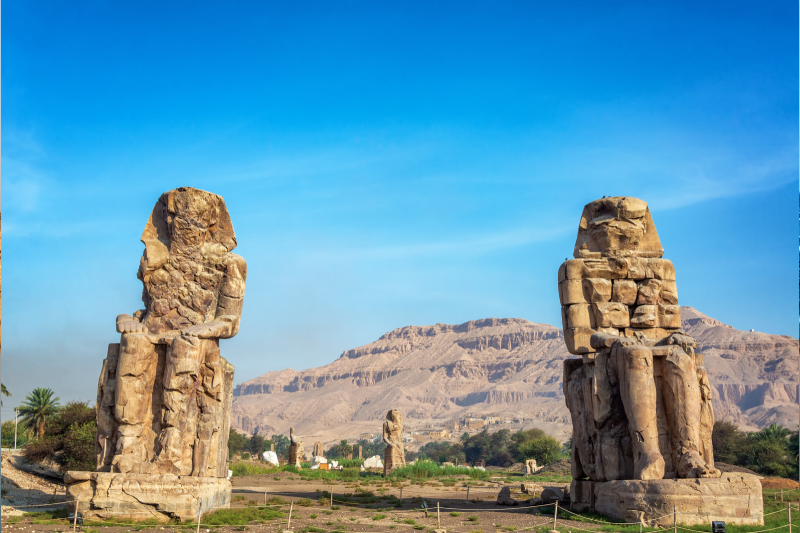
Colossi of Memnon
These two massive 720-ton quartzite statues guarded the entrance to Amenhotep III’s mortuary temple. Stopping here provides a grand photo opportunity directly along your return transfer route.
Driving from Coastal Resorts to the Valley
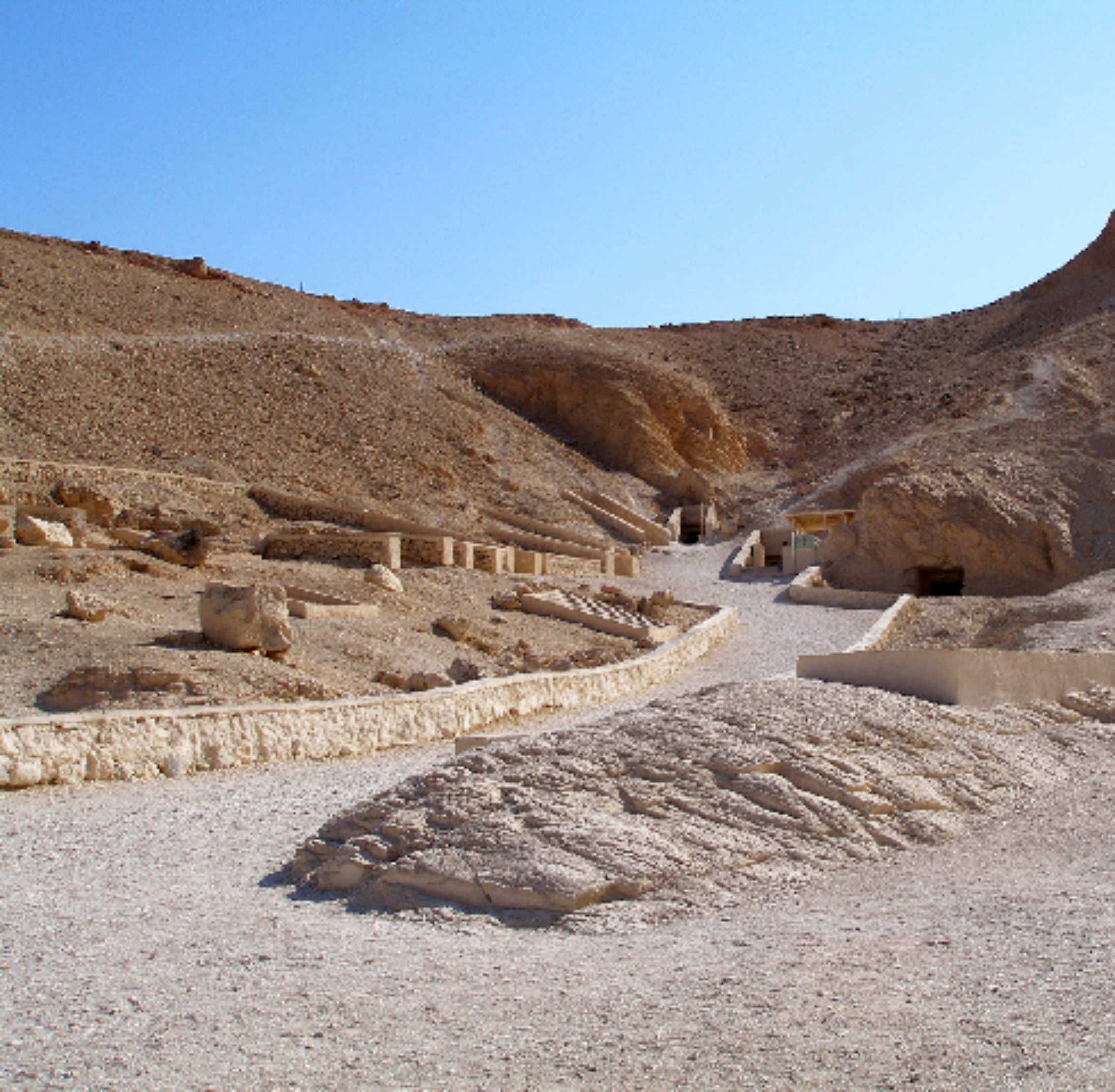
Valley of the KValley of the Queensings Tour from Hurghada _
A smooth, stress-free Valley of the Kings tour from Hurghada relies on precise road logistics. The journey spans approximately 280 kilometers across the Eastern Desert, connecting the Red Sea coastline to the West Bank of Luxor.
- Early Morning Departure (04:30 AM)
Your journey begins with a private resort pickup across Hurghada, Makadi Bay, or El Gouna. You will step directly into a climate-controlled private sedan or VIP minivan prepared for the drive. Guests can collect pre-ordered breakfast boxes from their hotel reception before departure to enjoy during the early morning leg of the trip.
- Safaga–Qena Highway Transit (06:30 AM)
The drive cuts inland via the Safaga–Qena desert highway, traveling along smooth, paved dual-carriageways that wind through the Red Sea mountains. Around the 85-kilometer mark, the route includes a brief 15-minute rest stop at a roadside café, giving travelers a chance to stretch, grab a hot drink, and use the facilities.
- Direct West Bank Arrival (08:30 AM)
By 08:30 AM, your vehicle arrives directly at the Valley of the Kings visitor center on Luxor’s West Bank. This early schedule ensures you clear security and reach the site entrance well ahead of the mass commercial tour buses, allowing for quiet exploration in comfortable morning temperatures.
Direct West Bank Routing Advantage:
Commercial group tours often stop first on the East Bank, forcing guests through crowded boat transfers before heading to the tombs during the hottest hours of the day. With a private Manolo Tours Egypt itinerary, your driver proceeds directly to the West Bank via the Luxor Bridge, placing you inside the royal tombs during cool early-morning hours.
Financial & Ticket Surcharge Transparency
Understanding exactly what your entry pass covers prevents unexpected expenses at the site ticket window. Here is the official ticket structure breakdown enforced by the Ministry of Tourism:
- General Valley Entry Ticket
The General Valley Ticket provides entry to any three standard open tombs within the necropolis (such as KV2, KV6, or KV8), as well as complimentary rides on the electric “Tuf-Tuf” shuttle train that transfers visitors from the main visitor center to the tomb area. This baseline admission pass is fully included in your Manolo Tours private package price.
- King Tutankhamun Pass (KV62)
To step inside the world’s most famous tomb, visitors must acquire a special access pass for KV62. This optional add-on ticket allows entry into the burial chamber to view the pharaoh’s original stone sarcophagus and actual mummy. It can be easily purchased at the main entrance ticket booth before heading up to the site.
- Seti I Masterpiece Pass (KV17)
The Tomb of Seti I requires a separate premium entry ticket due to strict daily visitor limits designed to preserve its delicate, high-relief artwork. As the deepest and most intricately decorated tomb in the Valley of the Kings, this specialized pass grants full access to explore its 137 meters of subterranean chambers.
- Ramses VI Astronomical Pass (KV9)
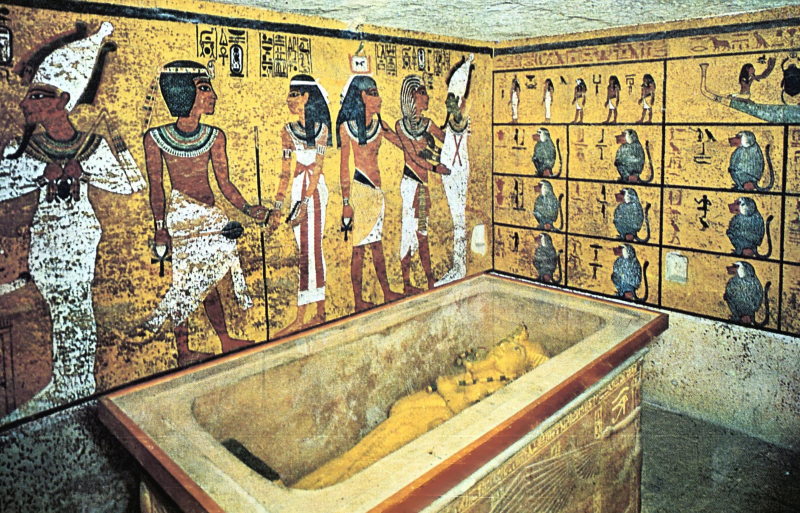
Valley of the Kings Tour from Hurghada The Tomb of Ramesses V
Offering exceptional value for photography enthusiasts, the Ramses VI add-on pass allows entry into one of the necropolis’s most visually striking monuments. This mid-tier ticket opens access to a grand dual-built corridor leading into a massive vaulted burial chamber, famous for its intact astronomical ceiling depicting the star-covered goddess Nut.
- Gate Ticket Payment Rules and Pre-Arrangement
The official ticket windows at the Valley of the Kings strictly require electronic payment via credit or debit card (Visa or Mastercard), as local ticket booths no longer accept physical cash currency for site passes. To ensure a seamless entry without queue delays, Manolo Tours pre-clears and arranges all your necessary entry permits in advance, allowing you to bypass the ticket line completely upon arrival.
FAQs
How many tombs are included in a standard Valley of the Kings tour from Hurghada?
Your general entrance ticket covers access to 3 open royal tombs from a rotating selection of active sites (such as KV2, KV6, and KV8). Extra passes can be added for special vaults like Tutankhamun (KV62) or Seti I (KV17).
Is King Tutankhamun’s tomb included in the standard entry ticket?
No. The Supreme Council of Antiquities requires a separate special entry pass to enter King Tutankhamun’s tomb (KV62). This pass can easily be added to your Valley of the Kings tour from Hurghada during booking.
Can I take photos inside the royal tombs?
Yes! Smartphone photography is 100% free inside all open royal tombs, provided your camera flash is toggled OFF. Professional cameras require a separate photo permit purchased at the main entrance gate.
How hot does it get inside the subterranean tombs?
Subterranean rock-cut tombs maintain a steady ambient temperature of 30°C to 35°C (86°F to 95°F) year-round. Ventilation fans and elevated wooden ramps help maintain air circulation inside deeper chambers.
Is a Valley of the Kings tour from Hurghada suitable for visitors with mobility challenges?
Yes, but tomb selection is key. Tombs like Ramses IV (KV2) feature wide, gently sloping wooden ramps with zero steep steps, making them highly accessible compared to deeper, multi-level tombs like Merenptah (KV8).
Why are guides not allowed to give lectures inside the tomb chambers?
To protect narrow subterranean corridors from excessive heat, humidity, and noise congestion, the Ministry of Tourism requires guides to deliver explanations outside the tomb entrance before guests step inside to view the carvings independently.
How long does the drive take from Hurghada to the Valley of the Kings?
The direct drive via the Safaga–Qena desert highway takes approximately 3.5 to 4 hours each way in a private, climate-controlled vehicle.
What is the best time of day to visit the Valley of the Kings?
Arriving early in the morning (between 08:00 AM and 09:30 AM) allows you to explore the tombs in comfortable temperatures before commercial tour bus groups arrive at peak hours.
Are flashlights needed inside the royal tombs?
No. All active, open royal tombs are fully lit with modern, low-UV LED floodlights designed to illuminate ancient pigments clearly without causing heat or light damage to plaster walls.
Can I buy extra tomb tickets at the gate with cash?
No. The official ticket window at the Valley of the Kings strictly operates on a card-only payment policy (Visa or Mastercard). When you book with Manolo Tours Egypt, all entry passes are pre-arranged seamlessly.
Key Takeaways
A dedicated Valley of the Kings tour from Hurghada provides private, climate-controlled access to 3,300-year-old subterranean royal vaults carved beneath the natural limestone pyramid of al-Qurn.
Standard entry tickets grant access to 3 high-yield tombs (such as Ramses IV, Ramses IX, and Merenptah), with optional add-on passes available for King Tutankhamun (KV62) and Seti I (KV17).
Pre-arranged digital access passes allow you to bypass long public ticket lines and card-only window delays.
Smartphone photography is completely free inside all open tombs provided camera flash is kept strictly turned off.
Book Your Private Valley of the Kings Tour Today
Ready to descend into the subterranean realm of Egypt’s legendary pharaohs with zero hassle, expert Egyptologist guidance, and guaranteed VIP execution? Reserve your excursion with Manolo Tours Egypt today.