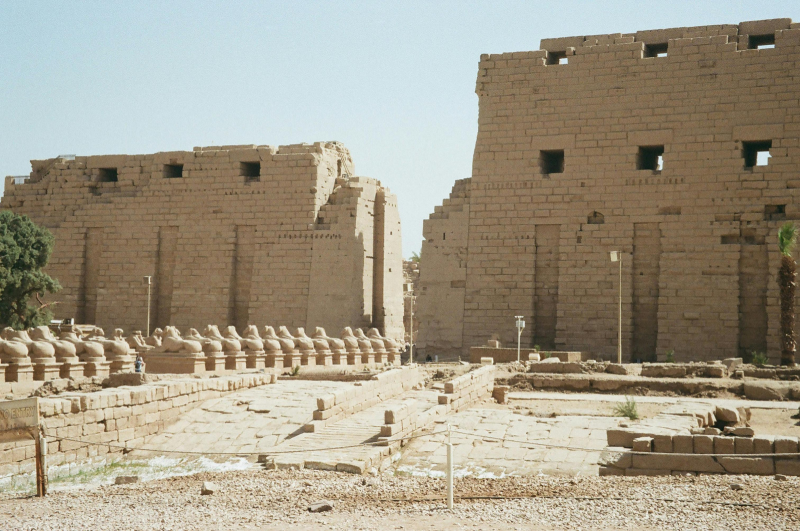
Without a Luxor Guided Tour from Hurghada, you’ll be standing before the ancient city of Thebes like someone holding a rare medieval manuscript in a language they don’t understand. The towering sandstone spires of Karnak, the deep underground tombs carved into the limestone mountains, and the terraced shrines of Deir el-Bahari are not just ancient stone structures; they are carved stone books containing religious philosophies, astronomical secrets, royal propaganda, and personal human stories written over millennia.
Choosing a Luxor guided tour from Hurghada is the single factor that decides whether your day trip becomes a routine sightseeing stop or a life-changing historical awakening. Without professional interpretation, a wall of hieroglyphics remains just a collection of carved birds and eyes. With an elite Egyptologist by your side, those same carvings reveal the dramatic religious revolution of Akhenaten, the tactical military genius of Thutmose III, and the secret ritual purifications performed by ancient High Priests beneath the desert stars.
At Manolo Tours Egypt, we do not employ generic tour escorts or audio-headset contractors. Our Luxor guided tour from Hurghada is anchored by fully licensed, university-degreed Egyptologists who hold specialized degrees in ancient Egyptian history, epigraphy, and archaeology.
We bridge the 280-kilometer gap between the Red Sea coast and the Nile Valley to provide you with private, one-on-one scholarly guidance tailored entirely to your personal curiosity, intellect, and pacing.
Why is a Private Guided Tour to Luxor from Hurghada Essential?
A private Luxor guided tour from Hurghada guarantees an immersive, high-yield cultural experience by pairing your party with a dedicated university-degreed Egyptologist. Unlike self-guided visits or large bus groups using audio guides, a private guide translates complex hieroglyphics on site, explains hidden architectural symbolism, adapts historical storytelling to your interests, shields you from local vendor pressure, and manages site timing so you avoid overcrowded tour bus arrival windows.
Escort vs. Licensed Egyptologist
Not all guided excursions are created equal. When booking a Luxor guided tour from Hurghada, many travelers assume that any individual holding a microphone on a tour bus is a qualified historian. In reality, the Egyptian tourism industry maintains strict distinctions between tour escorts, commercial group leaders, and licensed professional Egyptologists.
- Logistical Escorts and Basic Drivers
At the entry point of the spectrum, Level 1 covers tour escorts and drivers who handle essential logistical tasks such as managing headcounts, vehicle seating, and overall schedule timing. Individuals in this role do not possess formal academic training in Egyptology or ancient epigraphy. Under Egyptian regulations, they are not legally authorized to deliver guided commentary inside official archaeological sites.
- Commercial Mass-Group Guides
Level 2 represents mass-market commercial guides who hold general tourism credentials but operate under significant constraints. Because they manage large groups of 45 to 50 passengers at a time, their commentary is typically scripted, highly standardized, and delivered via megaphones. Operating on strict bus schedules, these tours usually follow fixed paths with minimal time for individual exploration or questions.
- Private Specialized Egyptologists
At the highest level, private Egyptologists—such as those provided by Manolo Tours—hold university degrees (B.A. or M.A.) in Egyptology or Archaeological Sciences alongside official licenses from the Egyptian Ministry of Tourism and Antiquities. Unbound by mass-bus itineraries, they deliver tailored, interactive commentary built directly around your personal interests, allowing for a deeper exploration of each site.
Why Academic Credentials Matter on Site:
Ancient Egyptian sites are complex religious and political spaces. A licensed Egyptologist undergoes four years of rigorous university study, covering ancient Egyptian language (Hieroglyphic, Hieratic, Demotic), ancient history, architecture, restoration techniques, and religion.
When you explore Karnak or the Valley of the Kings with a Manolo Tours Egypt specialist, your guide understands not only what a wall painting depicts, but why it was commissioned, the political propaganda behind it, and the precise century in which it was carved.
What Your Guide Reads for You on Site
The most magical moment of a Luxor guided tour from Hurghada occurs when stone carvings stop being abstract artistic patterns and transform into readable historical narrative. Hieroglyphics were not a simple picture alphabet; they were a sophisticated writing system combining ideograms, phonograms, and determinatives.
During your private tour, your Egyptologist guide acts as an active translator, teaching you how to spot and read key royal formulas directly off the sandstone and limestone walls:
- The Royal Cartouche (Shenu Oval)
The Royal Cartouche, derived from the ancient Egyptian Shenu ring, is an elongated oval loop with a horizontal bar at its base. It serves as a protective enclosure specifically designated for royal iconography. When carved into temple walls and tomb reliefs, the cartouche frames and identifies the birth or throne name of the reigning pharaoh, distinguishing royal nomenclature from standard hieroglyphic text.
- The Ankh & Was Scepter (Life & Dominion)
Often depicted together in tomb paintings and temple carvings, the Ankh and the Was Scepter represent fundamental divine attributes granted to the ruler. The Ankh symbol represents breath and eternal life, while the Was Scepter—a staff topped with a stylized animal head and a forked base—symbolizes power and dominion. In ancient reliefs, deities are frequently shown extending these symbols toward the pharaoh to signify the bestowal of divine authority and vitality.
- The Shen Ring (Eternal Circle)
The Shen Ring is a stylized loop of knotted rope forming an unbroken circle, symbolizing eternity, completeness, and infinite cosmic protection. Associated closely with solar deities and protective goddesses like Horus and Isis, this emblem signifies the continuous, eternal safeguard of the king’s name and legacy across both space and time.
1. Spotting Royal Cartouches (Shenu):
Your guide will show you how to locate the elongated oval loops with a horizontal bar at the bottom. Inside these loops are the sacred birth names (Nomen) and throne names (Prenomen) of rulers like Ramesses II, Hatshepsut, and Thutmose III. You will learn to recognize the distinctive cartouche of Ramesses II—featuring the sun disk of Ra, the user feather of truth, and the setep-en-ra formula—across dozens of columns in Karnak.
2. Reading Offering Formulas (Htp-di-nsw):
Every tomb and temple contains the standard funerary offering formula: “An offering which the king gives to Osiris, Lord of Abydos…” Your guide will point out the bread loaf, the mat, and the water jug symbols, enabling you to identify offering scenes independently as you walk through subterranean tomb chambers.
3. Dissecting Political Erasures & Damnatio Memoriae:
In Karnak Temple and the Mortuary Temple of Hatshepsut, your guide will direct your attention to hacked-away wall surfaces where royal cartouches and figures were deliberately chiselled out. You will learn how Thutmose III attempted to erase his stepmother Hatshepsut’s image from history, and how Akhenaten destroyed the names and images of Amun during his religious revolution in the Amarna Period.
Unlocking Sacred Geometry in Karnak & Hatshepsut
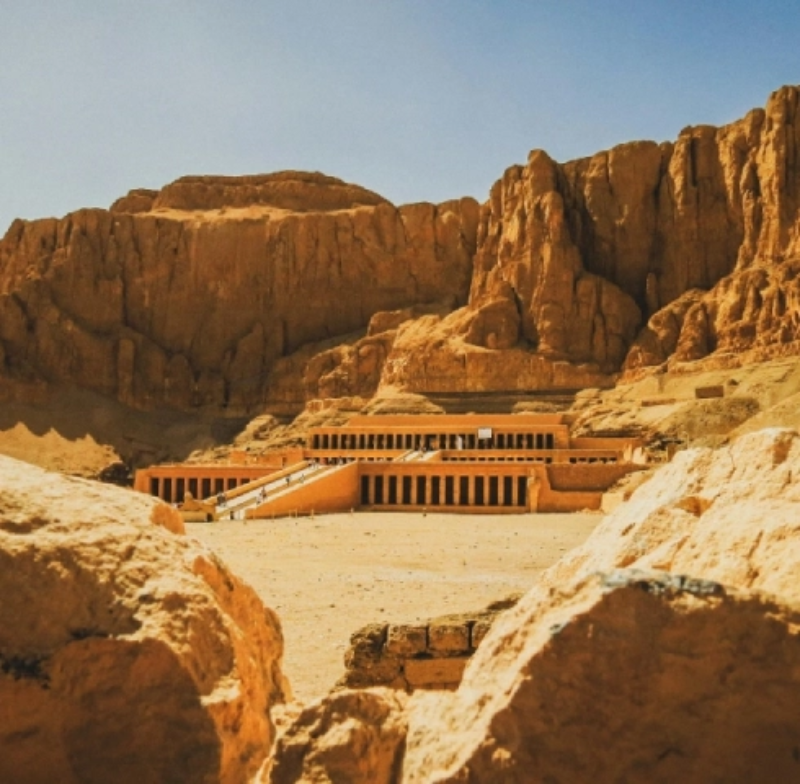
Luxor Guided Tour from Hurghada_Temple of Hatshepsut
To a self-guided visitor, Karnak Temple is a massive stone labyrinth and Deir el-Bahari is a beautiful cliffside building. To an Egyptologist, these structures are physical manifestations of ancient Egyptian cosmology, designed to mimic the creation of the universe itself (Primeval Mound / Benben).
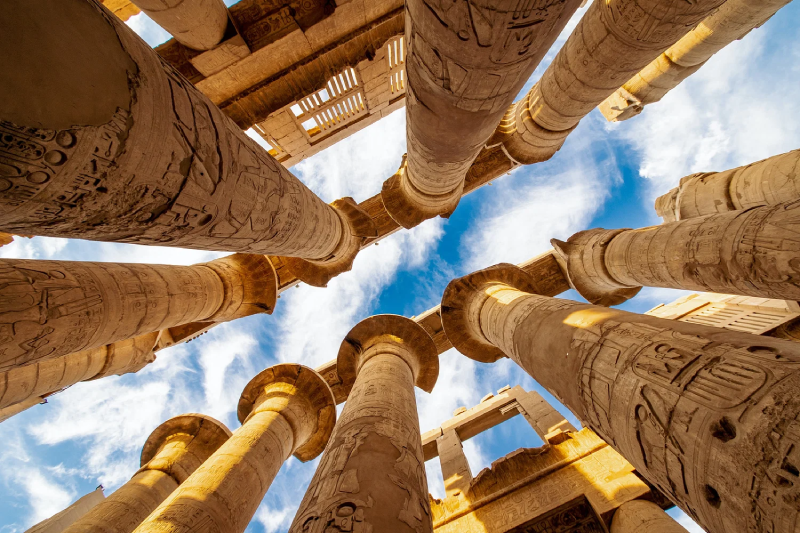
1. Karnak’s Great Hypostyle Hall: The Stone Marsh of Creation
Your private guide will show you how the 134 towering stone columns are not merely structural supports; they represent the marsh of papyrus reeds that rose from the primordial waters of chaos (Nun) at the beginning of time:
Luxor guided tour from Hurghada
Open Papyrus Capitals (Central Aisle):
The 12 central columns stand 21 meters high with open papyrus flower capitals, symbolizing plants reaching up to catch the sunlight.
Closed Bud Capitals (Side Aisles):
The surrounding 122 columns feature closed papyrus bud capitals, representing the shaded, dense interior of the cosmic marsh.
The Inclined Floor & Rising Sun:
As you walk from the entrance toward the Sanctuary of the Holy of Holies, your guide will point out how the ground level subtly rises while the roofline lowers, concentrating light into a sacred point of divine presence.
Mortuary Temple of Queen Hatshepsut: Harmonizing Architecture with Nature
Senenmut, Hatshepsut’s genius royal architect, did not build Deir el-Bahari by accident. Your Egyptologist guide will explain the sacred alignments and natural harmony built into the site:
The Cliff Alignment: The three rising terraced colonnades mirror the horizontal stratifications of the 300-meter limestone cliff face behind them, creating a seamless blend between human art and nature.
The Solstice Alignment: During the winter solstice, the rising sun aligns through the central axis of the temple, shining directly into the inner sanctuary of Amun-Ra.
Reading the Underworld Books in the Valley of the Kings
Luxor Guided Tour from Hurghada_Valley of the Kings (1)
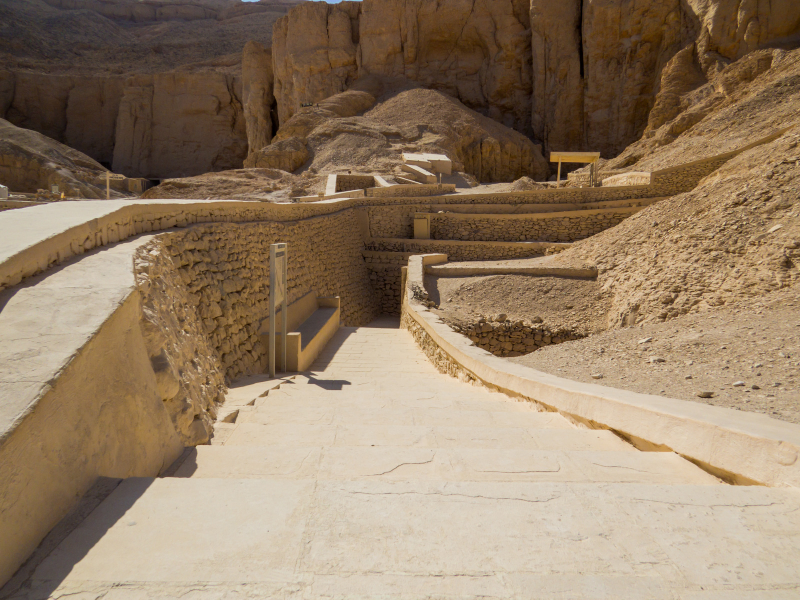
Descending into a subterranean royal tomb in the Valley of the Kings can be overwhelming without an expert decoder. The walls are covered from floor to ceiling with intricate magical spells, astronomical maps, and colorful underworld books.
Your Manolo Tours guide will explain the specific funerary texts painted on the stone walls, showing how they served as a literal instruction manual for the deceased pharaoh navigating the dangerous hours of the night:
- The Book of Amduat (The Secret Room)
The Book of Amduat—translating to “That Which Is in the Underworld”—serves as a comprehensive cosmic blueprint for the pharaoh’s journey after death. It systematically maps the sun god Ra’s 12-hour night voyage through the hidden realm of darkness. Guided by this text, the deceased pharaoh navigates the nocturnal obstacles alongside the solar barque to achieve nightly renewal and morning rebirth.
- The Book of Gates (12 Hour Gates)
Focusing on the strict barriers dividing the afterlife, the Book of Gates details the 12 hours of the night as heavily fortified portals. Each hour is guarded by ferocious demon gatekeepers armed with knives and holding guardian serpents. To secure safe passage, the pharaoh must possess the secret divine names and incantations required to prove their purity and pass through each threshold unharmed.
- The Book of Caverns (Osirian Trials)
The Book of Caverns presents a vivid, dramatic journey through the deepest subterranean realms of the underworld, placing strong emphasis on Osirian judgment and punishment. Through detailed registers and text, it illustrates the final destruction of chaotic forces and the ultimate resurrection of the king, culminating in the pharaoh’s transformation into an Akh—a glorified, eternal spirit united with the light.
Decoding the Astronomical Ceilings:
In tombs like Ramses IV (KV2) or Ramses VI (KV9), your guide will direct your eyes upward to the brilliant blue ceilings. You will learn to identify Nut, the sky goddess, bending across the ceiling to swallow the sun disk at night and give birth to it at dawn, symbolizing eternal royal rebirth.
Identifying the Judgment of the Soul (Weighing of the Heart):
Your guide will show you scenes of the deceased pharaoh standing before Osiris, the ruler of the underworld. You will learn to spot the scales where the pharaoh’s heart (Ib) is weighed against the feather of Ma’at (Truth), watched over by Anubis and Thoth, the ibis-headed scribe of the gods.
Storytelling That Brings Pharaohs to Life
Dates and dynastical lists can easily fade from memory, but human stories stay with you forever. The greatest strength of a private Luxor guided tour from Hurghada with a Manolo Tours Egypt Egyptologist is the transformation of cold stone names into living, breathing human beings with ambition, love, political struggles, and personal triumphs.
Instead of presenting ancient Egypt as a dry timeline of monuments, your private guide frames each site around historical narratives:
- The Queen Who Would Be King (Hatshepsut)
Hatshepsut’s reign stands as one of ancient Egypt’s most compelling political transformations. Initially ruling as regent, she systematically legitimized her authority by asserting her divine birth as the daughter of Amun-Ra. To align with centuries of tradition, she assumed the traditional male royal regalia—including the ceremonial false beard, kilt, and nemes headcloth—guiding Egypt through a prosperous era defined by ambitious trade expeditions and monumental architectural achievements.
- The First Workers’ Strike (Deir el-Medina)
Beyond royal politics, ancient Egypt hosted history’s first recorded labor dispute during the reign of Ramses III. The elite artisans and tomb builders living in the royal village of Deir el-Medina relied on state-supplied grain payments. When corruption and administrative delays halted these vital rations, the workers laid down their tools, organized sit-ins at local mortuary temples, and successfully forced the royal administration to pay their back wages.
- The Military Genius (Thutmose III)
Often called the “Napoleon of Ancient Egypt,” Pharaoh Thutmose III transformed the nation into an empire through unmatched strategic brilliance. Taking full power after Hatshepsut, he led 17 victorious military campaigns across the Levant and Nubia without a single defeat. His famous surprise march through the narrow Aruna Pass to win the Battle of Megiddo remains a landmark study in military mobility and surprise tactics.
The Drama of Hatshepsut and Thutmose III:
Inside the Mortuary Temple at Deir el-Bahari, your guide won’t just list architectural dimensions. They will bring to life the complex political relationship between Hatshepsut (the female pharaoh who wore the royal false beard) and her nephew/stepson Thutmose III, explaining the political necessity behind her divine birth story and the reasons why her images were carved out decades after her death.
The Real Lives of Royal Tomb Builders:
Looking across the West Bank hills, your Egyptologist will share the stories of the artisans and craftsmen who lived at Deir el-Medina. You’ll learn how they lived, painted tombs by oil lamp light, wrote personal letters on limestone flakes (ostraca), and staged the recorded history’s first labor strike when royal grain rations were delayed.
Field Protection & Crowd Avoidance Logistics
Navigating high-density archaeological sites requires tactical management. Beyond explaining history, your Manolo Tours private Egyptologist acts as a continuous operational manager and personal shield during your Luxor guided tour from Hurghada.
The Vendor Shield Protocol:
Popular archaeological sites can sometimes feature aggressive local vendors offering souvenirs, scarabs, or unauthorized photography services. Your private guide manages all physical transitions:
Direct Routing: Guiding your party through clear pathways, avoiding high-pressure souvenir traps.
Polite De-escalation: Handling vendor interactions in local Arabic so you walk undisturbed.
Authentic Artisan Cooperatives: If you wish to purchase authentic, hand-carved stone items, your guide takes you directly to official artisan cooperatives rather than commercial tourist traps selling imported plastic knockoffs.
Managing Site Flow & Avoiding Tour Bus Crowds:
Large commercial tour buses operating from Hurghada generally arrive at Karnak Temple between 10:00 AM and 11:30 AM, creating long lines at site entrances.
- Early Morning Private Access (08:30 AM – 10:00 AM)
Arriving early at Karnak Temple allows you to experience the vast complex before peak traffic begins. During this window, you can explore quiet corridors, capture unobstructed photographs, and enjoy clear, direct communication with your guide without background noise or distraction.
- Peak Commercial Bus Traffic (10:30 AM – 11:30 AM)
Mid-morning marks the arrival of large commercial tour buses. This period brings heavy foot traffic, higher noise levels, and noticeable crowding—particularly within the Great Hypostyle Hall—leading to longer wait times for key photo spots.
- Afternoon West Bank Transition (12:00 PM – 03:00 PM)
Transitioning to the West Bank during the hottest part of the day optimizes your timing. While large tour groups gather in unshaded outdoor areas, you can move inside the subterranean rock-cut tombs, enjoying cooler temperatures and a more comfortable viewing experience.
By leveraging an early departure, your guide brings you into Karnak during quiet morning hours, ensuring uninterrupted photography and easy, clear communication before large groups fill the hypostyle hall.
Tailoring Narrative Depth for Scholars, Families & Photographers
The mark of a true master Egyptologist is the ability to read the room and adjust the delivery instantly. A rigid, lecture-style guide can make children feel bored, while a overly simplified overview can frustrate an avid history buff.
When you book a private Luxor guided tour from Hurghada with Manolo Tours Egypt, your guide customizes the narrative depth, speed, and physical routing to match your travel party:
- Families & Children
For families traveling with young explorers, the narrative shifts toward storytelling and interactive discovery. Storytelling focuses on vivid themes like ancient mummies, magic spells, and daily pharaonic games. Interactive riddle hunts and engaging quests keep kids active and curious throughout the sites, turning complex history into an immersive adventure.
- Photographers & Artists
Visual storytellers benefit from a focus tailored to light, shadow, and visual framing. The commentary prioritizes optimal light angles throughout the day, uninterrupted lines of sight across grand colonnades, and the unique architectural geometry carved by shadows. This approach ensures ample time to capture striking, high-quality images without feeling rushed.
- Scholars & History Buffs
For history enthusiasts seeking deep analytical insight, the focus shifts to academic accuracy and technical detail. Discussions center on hieroglyphic epigraphy, line-by-line inscription translations, ancient diplomatic relations, and the distinct architectural construction phases of each temple and tomb.
Families with Children: Interactive History
Children learn best through stories, sensory engagement, and discovery. Your guide adapts the experience into an ancient adventure:
The Cartouche Treasure Hunt: Giving children a small notebook and pencil to spot and draw specific hieroglyphs (like the owl, the cobra, or the royal cartouche) across Karnak Temple.
Mythological Storytelling: Focusing on the colorful legends of gods like Seth (god of chaos), Anubis (jackal-headed protector), and Horus (falcon deity), explaining their powers in vivid, easy-to-understand ways.
Kid-Friendly Pacing: Scheduling rest breaks in shaded courtyards, keeping walking segments concise, and incorporating golf-cart shuttles whenever possible.
Photography Enthusiasts: Light, Line, and Composition
For photographers, a guide is not just a historian—they are a lighting and spatial advisor:
Optimizing Light Alignment: Guiding you to the exact angles where morning sunlight pierces through the clerestory windows in the Hypostyle Hall or hits the relief carvings of Hatshepsut’s terraces.
Unobstructed Views: Positioning your party away from group paths so you can frame wide-angle architectural shots without tour groups in the background.
Scholars and History Buffs: Deep Academic Dialogue
If you have read extensively about ancient Egypt, your guide engages at an advanced academic level:
Translating Specific Texts: Reading exact line-by-line translations of the Treaty of Kadesh (the world’s earliest recorded peace treaty) on the Karnak walls.
Debating Historical Theories: Discussing current archaeological debates surrounding the Amarna period, royal lineage DNA findings, and construction techniques of massive granite obelisks.
Language Fluency & Cultural Nuance in Guiding
A great historical story loses its power if it is interrupted by language barriers or awkward translations. Ancient Egyptian history is complex, and explaining terms like Ka (vital life force), Ba (personality soul), or Ma’at (cosmic balance and truth) requires deep language fluency.
At Manolo Tours Egypt, our private Luxor guided tour from Hurghada is provided in your native language by guides who have completed specialized linguistic and cultural training:
- Western and Central European Language Coverage
Private tours feature full, dedicated coverage in major Western and Central European languages. Travelers can explore ancient sites alongside university-educated Egyptologists fluent in English, German, French, Italian, and Spanish. This ensures that historical narratives, hieroglyphic translations, and site commentary are delivered clearly in your preferred native language.
- Eastern and Northern European Guiding Options
To accommodate a broad range of international guests, private guiding is also available across key Eastern and Northern European languages. Private Egyptologist support extends to Russian, Polish, Dutch, Czech, and Slovak. Having a guide who speaks your primary language allows for easy communication, seamless logistics, and custom Q&A throughout your tour.
Why Native-Level Fluency Matters:
Nuanced Storytelling:
Nuance and humor make history entertaining. A fluent guide uses natural phrasing and relatable comparisons rather than translating literal textbook sentences word-for-word.
Clear Q&A:
You can ask complex, spontaneous questions—whether about religious philosophy, daily ancient life, or modern Egyptian customs—and receive clear, detailed answers instantly.
Cultural Comfort:
Your guide understands cultural preferences and communication styles, ensuring you feel completely relaxed, respected, and understood throughout the entire day.
Financial & Tipping Blueprint for Private Guides
To maintain complete peace of mind during your Luxor guided tour from Hurghada, financial transparency regarding private guiding services is essential. Understanding what is included in your VIP package—and how to navigate local tipping customs (Baksheesh)—ensures a smooth, comfortable day with zero awkward monetary moments.
Cost Breakdown: Included Guiding vs. Hidden Surcharges
When you reserve a private excursion with Manolo Tours Egypt, your licensed Egyptologist is 100% dedicated to your travel party for the full duration of the tour.
- Guiding Structure & Personalization
The VIP Private Guided Package offers an exclusive private Egyptologist dedicated solely to your group, allowing for unlimited direct Q&A and a personalized narrative tailored to your interests. In contrast, mass commercial bus tours assign a single guide to roughly 45 to 50 passengers, making individual interaction and customized questions nearly impossible.
- Site Access & Included Entry Fees
With the VIP private option, all core historical site entry fees are fully covered and included in your package upfront. Mass commercial tours often exclude specific tomb or temple tickets, leaving travelers with unexpected out-of-pocket expenses or confusing entry fee add-ons at the site entrance.
- Time Efficiency & Pricing Transparency
VIP private tours enforce a strict zero-shopping policy, ensuring your day is focused entirely on exploring monuments without forced stops. Conversely, mass commercial tours often spend two to three hours at high-commission tourist shops. Furthermore, all guide fees and taxes are fully pre-paid in the VIP package, whereas mass tours frequently feature unclear pricing structures or additional local collections.
The Private Egyptologist Tipping Matrix (Baksheesh Culture)
In Egyptian tourism culture, tipping is a traditional way to show appreciation for exceptional service, deep academic knowledge, and attentive care.
Tips are entirely discretionary and should reflect the quality, passion, and personal attention provided by your guide throughout your 14-hour excursion.
- Standard Exceptional Service Tipping Guidelines
For a private tour that runs smoothly, stays on schedule, and includes clear hieroglyphic translations with engaging site walkthroughs, a total tip of $25 to $35 USD per private group or family is standard. This rewards high-quality guiding, professional logistics, and attentive service throughout your itinerary.
- Masterclass & Custom Deep Service Tipping Guidelines
When an Egyptologist goes above and beyond—providing in-depth academic insights, tailored activities for children, specialized photography assistance, or proactive management of local vendors—a total tip of $40 to $50 USD or more per group is customary. This reflects the extra care, deep specialization, and customized attention dedicated to enhancing your experience.
Pro Tipping Tip: It is customary to hand your tip directly to your private guide at the end of the historical program (typically after the final site visit or before your return highway transfer) in a discreet, private envelope or hand-off. Tips can be given in USD, EUR, GBP, or EGP.
FAQs
Are guides included on a Luxor guided tour from Hurghada?
Yes! When you book a private excursion with Manolo Tours Egypt, a fully licensed, university-degreed Egyptologist guide is exclusively assigned to your party for the entire duration of your tour in Luxor.
What qualifications do your private Egyptologist guides hold?
Our guides hold degrees (B.A. or M.A.) in Egyptology, Epigraphy, or Archaeological Sciences from accredited universities and are officially licensed by the Egyptian Ministry of Tourism and Antiquities.
Will our guide accompany us inside the tombs in the Valley of the Kings?
To protect narrow tomb corridors from high humidity and noise, the Supreme Council of Antiquities requires guides to deliver detailed explanations outside the tomb entrance using high-resolution diagrams. You then step inside to view the carvings and cartouches firsthand.
Can we choose the language of our private Egyptologist guide?
Yes. We offer private guiding in multiple languages including English, German, French, Italian, Spanish, Russian, Polish, Dutch, Czech, and Slovak.
How does a private guide tailor the tour for families with children?
Your private guide adapts the narrative into an engaging story, using hieroglyphic scavenger hunts, simplified mythological tales, and comfortable rest intervals to keep children excited and engaged.
Does a private guided tour include forced visits to souvenir shops?
No. Manolo Tours Egypt enforces a strict zero-forced-shopping policy. 100% of your operational hours with your guide are dedicated exclusively to historical sites, temple exploration, and relaxed dining.
Can our guide help translate specific hieroglyphic texts on site?
Yes! Our Egyptologists read hieroglyphic wall reliefs in real time, helping you decode royal cartouches, offering formulas, and underworld texts line by line.
What is the standard tipping amount for a private Egyptologist guide?
Tipping is discretionary but customary. A typical tip ranges between $25 and $35 USD total per private group for exceptional service, or $40 to $50+ USD for custom, masterclass-level academic guiding.
Will our guide help manage local site vendors and crowd delays?
Yes. Your guide acts as your personal operational shield, de-escalating vendor pressure in local Arabic and navigating around large tour bus crowds to ensure a peaceful experience.
Can our guide adjust the itinerary timing if we want to stay longer at a specific temple?
Because your tour is 100% private, your Egyptologist guide can adjust site walking times on the fly, allowing you to spend extra time at Karnak or the Valley of the Kings based on your personal interest.
Key Takeaways
A private Luxor guided tour from Hurghada transforms cold stone monuments into living history through real-time hieroglyphic translation and architectural interpretation.
University-degreed Egyptologist guides provide deep scholarly context, political background, and ancient human stories that audio devices and memorized speeches cannot deliver.
Private guides shield your personal space from high-pressure site vendors and schedule site entries to avoid peak commercial tour bus crowds.
Tailored narrative options ensure history is delivered at the perfect depth—whether interactive for kids, light-aligned for photographers, or academic for scholars.
Book Your Private Guided Luxor Tour Today
Ready to experience ancient Thebes through the eyes of an elite Egyptologist? Unlock 4,000 years of history with absolute clarity, personal comfort, and academic depth.